It was gross.
(In a good way.)
UPDATE (5PM): More here.
Wednesday, September 24, 2008

Tuesday, September 23, 2008
Opening night
Fearing that I wouldn't like a significant portion of the program and being curious about the alternate presentation (my previous reservations thereon being here and here), I watched this year's Met season opener from a Manhattan movie theater. If you missed reading about it, soprano Renee Fleming sang Act II of Traviata, Act III of Massenet's Manon, and the final scene of Capriccio.
Technically, the show was mixed. Epic fail at Traviata's start: it took until halfway through the first scene for subtitles to appear. More jarring, though, was director Gary Halvorson's addiction to the moving footlight-level camera (the technical name of which escapes me), which he used to constant and disorienting -- even woozy-making -- effect during this scene. Unfortunately all camera trickery failed to find an appropriate angle for the second scene's final tableau, which absolutely demands that all three principals be put in the same shot. Instead we got an incoherent mess. Awful.
The next two segments were better-shot, with the low-level moving camera actually being put to good use during Vargas' prayer-aria in the St. Sulpice scene. As for the non-operatic bits, we could have done without the 40-minute Met infomercial (with additional product placements!) before the action, but if it works as marketing, sure... The Martha Stewart drink-mixing demo in the last intermission crossed some line of decency, however.
Still the overall effect was, for the first two acts, hugely successful. The transmitted soundtrack is oddly shaped, and one misses at least some essential 15% of the singers' real sound (particularly the physicality of Fleming's in climaxes), but the singers -- most of all Fleming herself, despite a couple of memory glitches -- seemed energized and inspired by the occasion and, in Traviata, by the presence of James Levine. Both Traviata (with which Fleming and Vargas so memorably opened the 2003-04 season) and Manon were really moving, even framed by infomercial frippery and Lagerfeld's awful Manon dress. (Not to knock hosts Susan Graham and Deborah Voigt, who did well with what they had.) Incidentally: both of the Traviata cabalettas were cut, which was a bit odd considering that at least the first has been done regularly at the Met of late. I assume this was both to keep the focus on Fleming and to protect Vargas who came out cold to his aria.
The Strauss was another matter. He and librettist (and greatest of Strauss conductors) Clemens Krauss crafted a work of art about art -- specifically Strauss' own idiosyncratic notion of opera. They add complication upon complication to the piece's initial poetic-musical seed until, from a comic Octet, they strip all away almost to anticlimax. What's left, by the end, is the prime element of Strauss' art: neither words nor music (the ostensible focus/decision point of the story) but the eternal-feminine -- musing on her own existence.
But Fleming in this place is curiously empty, all too ready to fall into embarrassing tics (the cocktail-party laugh, the thing that looked a bit too much like vogueing) and unironic emotionalizing. The Countess, like Der Rosenkavalier's Marschallin, muses into her mirror, and though I think they (and the Empress in Die Frau ohne Schatten) are essentially the same person, this opera makes quite clear what sort of character is its star. "You look back at me a bit ironically?" the Countess asks her reflection as she tries to decide, "I want an answer and not your questioning look!"
Smilingly ironic silence as the expression of a heart in love: though Fleming's lush voice isn't built to sound this combination, she could at least enact its phrases and externals. And I believe she tries... but the experience is too far from her own being. The Countess' exterior emptiness (blankness) is a pregnant one, full of (and protecting) the possibilities she holds in balance and does not (cannot, for the Empress, which is her problem) allow love's compulsion to touch -- and full, for Strauss, of the art born therefrom -- but for Fleming it's a vacuum, uncomfortable to put on and quickly filled by whatever comes to hand. The constant close-up perspective of the moviecast highlighted the issue.
Nor was she helped, this time, by conductor Patrick Summers, who led a literal and seemingly underrehearsed account of Strauss' orchestral part. Sometimes I think a really strong Straussian hand -- these days Thielemann, or perhaps Luisi -- could do something remarkable with and for Fleming in these roles, but Summers is far from that ideal.
On the whole, it was a worthwhile evening -- even in transmitted form -- with excellent stretches of performance. It's hard to imagine better promotion for Thaïs and the Levine-conducted shows.
[Related past posts: Fleming in Traviata (2007); Fleming in Manon (2005); school-of-Fleming soprano Pamela Armstrong in Capriccio (City Opera 2005)]
Technically, the show was mixed. Epic fail at Traviata's start: it took until halfway through the first scene for subtitles to appear. More jarring, though, was director Gary Halvorson's addiction to the moving footlight-level camera (the technical name of which escapes me), which he used to constant and disorienting -- even woozy-making -- effect during this scene. Unfortunately all camera trickery failed to find an appropriate angle for the second scene's final tableau, which absolutely demands that all three principals be put in the same shot. Instead we got an incoherent mess. Awful.
The next two segments were better-shot, with the low-level moving camera actually being put to good use during Vargas' prayer-aria in the St. Sulpice scene. As for the non-operatic bits, we could have done without the 40-minute Met infomercial (with additional product placements!) before the action, but if it works as marketing, sure... The Martha Stewart drink-mixing demo in the last intermission crossed some line of decency, however.
Still the overall effect was, for the first two acts, hugely successful. The transmitted soundtrack is oddly shaped, and one misses at least some essential 15% of the singers' real sound (particularly the physicality of Fleming's in climaxes), but the singers -- most of all Fleming herself, despite a couple of memory glitches -- seemed energized and inspired by the occasion and, in Traviata, by the presence of James Levine. Both Traviata (with which Fleming and Vargas so memorably opened the 2003-04 season) and Manon were really moving, even framed by infomercial frippery and Lagerfeld's awful Manon dress. (Not to knock hosts Susan Graham and Deborah Voigt, who did well with what they had.) Incidentally: both of the Traviata cabalettas were cut, which was a bit odd considering that at least the first has been done regularly at the Met of late. I assume this was both to keep the focus on Fleming and to protect Vargas who came out cold to his aria.
The Strauss was another matter. He and librettist (and greatest of Strauss conductors) Clemens Krauss crafted a work of art about art -- specifically Strauss' own idiosyncratic notion of opera. They add complication upon complication to the piece's initial poetic-musical seed until, from a comic Octet, they strip all away almost to anticlimax. What's left, by the end, is the prime element of Strauss' art: neither words nor music (the ostensible focus/decision point of the story) but the eternal-feminine -- musing on her own existence.
But Fleming in this place is curiously empty, all too ready to fall into embarrassing tics (the cocktail-party laugh, the thing that looked a bit too much like vogueing) and unironic emotionalizing. The Countess, like Der Rosenkavalier's Marschallin, muses into her mirror, and though I think they (and the Empress in Die Frau ohne Schatten) are essentially the same person, this opera makes quite clear what sort of character is its star. "You look back at me a bit ironically?" the Countess asks her reflection as she tries to decide, "I want an answer and not your questioning look!"
Smilingly ironic silence as the expression of a heart in love: though Fleming's lush voice isn't built to sound this combination, she could at least enact its phrases and externals. And I believe she tries... but the experience is too far from her own being. The Countess' exterior emptiness (blankness) is a pregnant one, full of (and protecting) the possibilities she holds in balance and does not (cannot, for the Empress, which is her problem) allow love's compulsion to touch -- and full, for Strauss, of the art born therefrom -- but for Fleming it's a vacuum, uncomfortable to put on and quickly filled by whatever comes to hand. The constant close-up perspective of the moviecast highlighted the issue.
Nor was she helped, this time, by conductor Patrick Summers, who led a literal and seemingly underrehearsed account of Strauss' orchestral part. Sometimes I think a really strong Straussian hand -- these days Thielemann, or perhaps Luisi -- could do something remarkable with and for Fleming in these roles, but Summers is far from that ideal.
On the whole, it was a worthwhile evening -- even in transmitted form -- with excellent stretches of performance. It's hard to imagine better promotion for Thaïs and the Levine-conducted shows.
[Related past posts: Fleming in Traviata (2007); Fleming in Manon (2005); school-of-Fleming soprano Pamela Armstrong in Capriccio (City Opera 2005)]
Season five
This post indexes the blog's commentary on the 2008-2009 Metropolitan Opera season. It will be updated as new reviews are posted.
Season preview: conductors, female singers, male singers, productions
Opening Night
Salome, short and long; and more; and more
Don Giovanni, a later cast, the spring cast, and more
La Traviata, and more
La Damnation de Faust
Madama Butterfly
Queen of Spades
Thaïs
Tristan und Isolde
La Boheme and its later tenor
La Rondine
Orfeo ed Euridice, without Blythe, with Blythe, and without Levine
Rigoletto, and a later cast
Eugene Onegin
Il Trovatore, and more, and a later cast
La Sonnambula, and more
Rusalka
Die Walküre, and a later cast, and the last performance
L'elisir d'amore
Siegfried
Götterdämmerung
125th Anniversary Gala
Season preview: conductors, female singers, male singers, productions
Opening Night
Salome, short and long; and more; and more
Don Giovanni, a later cast, the spring cast, and more
La Traviata, and more
La Damnation de Faust
Madama Butterfly
Queen of Spades
Thaïs
Tristan und Isolde
La Boheme and its later tenor
La Rondine
Orfeo ed Euridice, without Blythe, with Blythe, and without Levine
Rigoletto, and a later cast
Eugene Onegin
Il Trovatore, and more, and a later cast
La Sonnambula, and more
Rusalka
Die Walküre, and a later cast, and the last performance
L'elisir d'amore
Siegfried
Götterdämmerung
125th Anniversary Gala
Monday, September 22, 2008
The Met season ahead, part III -- the men
(Part I - Part II)
While -- with some exceptions -- the female half of this current Met roster is dominated by the talent of the (later) 1990s, the men's portion is more newly arrived. The most prolific lead (by production -- I haven't had the patience to count actual evenings) this season will be tenor Piotr Beczala, who made his debut less than two years ago as the Duke in Rigoletto. (I only caught that run's other tenor, but Maury was impressed.) Beczala stars in Lucia, Onegin, and Rigoletto again (though this one just for one evening), making it quite likely that I and a whole bunch of other Metgoers will see him this time around.
Now some of these performances may have been substituting for Gelb favorite Rolando Villazon -- who returns from a long hiatus in January -- but he himself didn't debut here until 2003, becoming ubiquitous on his return two years later (also in Rigoletto). Villazon's is certainly one of the stories of the season: whatever you make of his vocal chops, it's hard not to like the man, and the personal-vocal crisis (from which he may or may not have emerged) that felled him last year is a terrifying thing indeed. Whether or not some drama with her contributed to the crisis, the January performances of Lucia -- in which Villazon sings Edgardo -- will be not only his first since at the Met but his first since with Anna Netrebko. Afterwards he's scheduled for L'Elisir d'Amore.
Also scheduled for Elisir (though only one performance) is another young tenor who may already be the man to watch: Joseph Calleja. Calleja, who debuted here in 2006 in -- what else -- Rigoletto, will have turned 31 by the time he reappears in Rigoletto -- and that one Elisir -- next April. His instrument's combination of easy spaciousness, bel canto control, and a throwback vibrato-bearing timbre must be heard -- in person! -- to be believed: I don't want to jinx him, but to my ears Calleja seems by far the most talented Italian-rep singer since Pavarotti.
Last of the doubly-engaged young tenors is Giuseppe Filianoti, who shares Rigoletto with Beczala and Calleja before singing in La Rondine. He impressed in his 2005 debut as Edgardo, but a medical crisis and consequent surgery left his singing somewhat forced and unbalanced on his return in the same part in last season's new Lucia production. With luck, he will return to his debut form, though the increasing heaviness of his repertoire is a worry.
Incidentally, Villazon, Calleja, and Filianoti were all winners in the same year at Placido Domingo's Operalia competition: 1999. They were then 27, 21, and 25 respectively.
* * *
Of course, more veteran stars haven't all been put out to pasture. Domingo himself sings two roles -- Maurizio in Adriana Lecouvreur (his debut role four decades ago) and Siegmund in Ring Cycles 2 and 3, as well as having some presumed part in the company's 125th Anniversary Gala that also honors his 40th season. Ramon Vargas, whose performances last season were among its highlights, sings two-thirds of opening night and an entire run of La Boheme. The workmanlike Marcello Giordani seems no longer to be the Official Tenor of the Metropolitan Opera, but does star in the new production of the Damnation of Faust and part of the Madama Butterfly revival. And, rounding out the tenors, Roberto Alagna sings some of his wife's performances of La Rondine before returning for the tenor leads in Cav and Pag.
Low-voiced men's maturation cycles make it unsurprising that familiar names recur in that part of the roster. Thomas Hampson, for example, appears in opening night, a new production of one of the few operas where the baritone is the leading man (Thaïs), and perhaps the most promising of the season's revivals (Onegin with Karita Mattila and conductor Jiři Bělohlávek): one can as well say the season is to be his as anyone else's. (As I rather like his current grittified incarnation, I think this is a good thing. Others seem to disagree.) Elsewhere one can hear Dwayne Croft twice (opening night, Butterfly), John Relyea twice (Damnation of Faust, Cenerentola), Rene Pape as King Marke (Tristan) and two different Ring roles, Mariusz Kwiecien twice (Boheme, Lucia), and basses Kwangchul Youn and James Morris in seemingly everything under the sun. Ring Cycles 1 and 3 feature what may be Morris' house farewells to a signature part he's sung for decades -- Wotan/the Wanderer.
But even among the low-voiced one sees new blood multiply engaged. Bass Ildar Abdrazakov, a.k.a. Mr. Olga Borodina, has shown himself a fine singer since his little-noted 2004 debut and will, after subbing for James Morris in last Thursday's Verdi Requiem, sing one performance of Leporello in Don Giovanni along with a bunch of Raimondos in Lucia. Even more prominent is baritone Željko Lucic (a debutant two years ago in Gioconda), who will accomplish a Verdi trifecta by singing Germont (Traviata), Rigoletto, and di Luna (Trovatore).
* * *
Actual debuts are to be made by quite a few leading men. Perhaps most momentous is tenor Christian Franz as Siegfried in Ring Cycles 1 and 2, though tenor Aleksandrs Antonenko's debut opposite Renee Fleming in Rusalka won't be small. Other debuting men, in more or less substantial parts: Finnish bass-baritone Juha Uusitalo plays Jokanaan opposite his countrywoman's Salome; Don Giovanni brings the debut of not only Australian bass-baritone Joshua Bloom (Masetto), but later tenor Pavol Breslik (Ottavio) and golden-voiced Lindemann bass-baritone Shenyang (also Masetto); baritone Vladimir Stoyanov sings Enrico in the early Lucias before returning for a smaller part in Queen of Spades; Eric Owens debuts as General Groves in Doctor Atomic and then sings Sarastro in the kids' Magic Flute; baritone Gerd Grochowski sings Kurwenal in the Barenboim-led Tristan; veteran Italian baritone Alberto Mastromarino comes to the Met as Tonio in Pagliacci; and the Ring cycle concludes with another debut in Götterdämmerung -- bass-baritone Iain Paterson as Gunther.
* * *
Despite this litany of names, some true established stars only appear once and thus have yet to be mentioned -- Matthew Polenzani (Don Giovanni), Ben Heppner (Queen of Spades), Juan Diego Florez (Sonnambula), Bryn Terfel (only appearing, bizarrely enough, as Dulcamara in Elisir), and too many others to list.
A contrasting pair is at the center of Don Giovanni, which besides a weak production (its Zeffirelli predecessor was much better) and a slew of big names in the supporting parts features two rather different singers in the title role. First is Erwin Schrott, whom we -- thanks to his association with Anna Netrebko -- are bound to see more of, for good or for ill. Sonically, as last year's Figaro showed, there's little reason to complain, but he seems inclined enough to character-busting overacting that following her example any further could make him just unwatchable. On the other hand, Don Giovanni is a narcissistic, sociopathic cad, so a lack of humanity might work. To a point.
The other Giovanni -- Swedish baritone Peter Mattei -- is something like the platonic ideal of the traditional Don previously embodied by, e.g., Ezio Pinza. His charisma and vocal command are as seemingly effortless as his handsome appearance: for this Don Giovanni seduction is natural, and villainy is something he occasionally deigns to indulge. It's a conception perhaps closer to the heart of a more Romantic age, when Don Giovanni was almost (or more than almost) a hero... (These days one's more likely to squirm at his abuse of position and the unwillingness of his peers to think badly of one of their own.) But with Mattei the embodiment rings strongly true in any context, and every operagoer should see him in the role at least once.
* * *
In a sense it's not a huge surprise, given this season's repertory, but the absence for a third full season of the singer who had the most astounding and successful house debut of the age -- receiving the endless shouts, floor- and wall-pounding, and thunderous applause of those who knew they'd seen a glorious, paradigm-shattering event that "success" barely even describes -- is little short of disgraceful.
Where on earth is Klaus Florian Vogt?
While -- with some exceptions -- the female half of this current Met roster is dominated by the talent of the (later) 1990s, the men's portion is more newly arrived. The most prolific lead (by production -- I haven't had the patience to count actual evenings) this season will be tenor Piotr Beczala, who made his debut less than two years ago as the Duke in Rigoletto. (I only caught that run's other tenor, but Maury was impressed.) Beczala stars in Lucia, Onegin, and Rigoletto again (though this one just for one evening), making it quite likely that I and a whole bunch of other Metgoers will see him this time around.
Now some of these performances may have been substituting for Gelb favorite Rolando Villazon -- who returns from a long hiatus in January -- but he himself didn't debut here until 2003, becoming ubiquitous on his return two years later (also in Rigoletto). Villazon's is certainly one of the stories of the season: whatever you make of his vocal chops, it's hard not to like the man, and the personal-vocal crisis (from which he may or may not have emerged) that felled him last year is a terrifying thing indeed. Whether or not some drama with her contributed to the crisis, the January performances of Lucia -- in which Villazon sings Edgardo -- will be not only his first since at the Met but his first since with Anna Netrebko. Afterwards he's scheduled for L'Elisir d'Amore.
Also scheduled for Elisir (though only one performance) is another young tenor who may already be the man to watch: Joseph Calleja. Calleja, who debuted here in 2006 in -- what else -- Rigoletto, will have turned 31 by the time he reappears in Rigoletto -- and that one Elisir -- next April. His instrument's combination of easy spaciousness, bel canto control, and a throwback vibrato-bearing timbre must be heard -- in person! -- to be believed: I don't want to jinx him, but to my ears Calleja seems by far the most talented Italian-rep singer since Pavarotti.
Last of the doubly-engaged young tenors is Giuseppe Filianoti, who shares Rigoletto with Beczala and Calleja before singing in La Rondine. He impressed in his 2005 debut as Edgardo, but a medical crisis and consequent surgery left his singing somewhat forced and unbalanced on his return in the same part in last season's new Lucia production. With luck, he will return to his debut form, though the increasing heaviness of his repertoire is a worry.
Incidentally, Villazon, Calleja, and Filianoti were all winners in the same year at Placido Domingo's Operalia competition: 1999. They were then 27, 21, and 25 respectively.
Of course, more veteran stars haven't all been put out to pasture. Domingo himself sings two roles -- Maurizio in Adriana Lecouvreur (his debut role four decades ago) and Siegmund in Ring Cycles 2 and 3, as well as having some presumed part in the company's 125th Anniversary Gala that also honors his 40th season. Ramon Vargas, whose performances last season were among its highlights, sings two-thirds of opening night and an entire run of La Boheme. The workmanlike Marcello Giordani seems no longer to be the Official Tenor of the Metropolitan Opera, but does star in the new production of the Damnation of Faust and part of the Madama Butterfly revival. And, rounding out the tenors, Roberto Alagna sings some of his wife's performances of La Rondine before returning for the tenor leads in Cav and Pag.
Low-voiced men's maturation cycles make it unsurprising that familiar names recur in that part of the roster. Thomas Hampson, for example, appears in opening night, a new production of one of the few operas where the baritone is the leading man (Thaïs), and perhaps the most promising of the season's revivals (Onegin with Karita Mattila and conductor Jiři Bělohlávek): one can as well say the season is to be his as anyone else's. (As I rather like his current grittified incarnation, I think this is a good thing. Others seem to disagree.) Elsewhere one can hear Dwayne Croft twice (opening night, Butterfly), John Relyea twice (Damnation of Faust, Cenerentola), Rene Pape as King Marke (Tristan) and two different Ring roles, Mariusz Kwiecien twice (Boheme, Lucia), and basses Kwangchul Youn and James Morris in seemingly everything under the sun. Ring Cycles 1 and 3 feature what may be Morris' house farewells to a signature part he's sung for decades -- Wotan/the Wanderer.
But even among the low-voiced one sees new blood multiply engaged. Bass Ildar Abdrazakov, a.k.a. Mr. Olga Borodina, has shown himself a fine singer since his little-noted 2004 debut and will, after subbing for James Morris in last Thursday's Verdi Requiem, sing one performance of Leporello in Don Giovanni along with a bunch of Raimondos in Lucia. Even more prominent is baritone Željko Lucic (a debutant two years ago in Gioconda), who will accomplish a Verdi trifecta by singing Germont (Traviata), Rigoletto, and di Luna (Trovatore).
Actual debuts are to be made by quite a few leading men. Perhaps most momentous is tenor Christian Franz as Siegfried in Ring Cycles 1 and 2, though tenor Aleksandrs Antonenko's debut opposite Renee Fleming in Rusalka won't be small. Other debuting men, in more or less substantial parts: Finnish bass-baritone Juha Uusitalo plays Jokanaan opposite his countrywoman's Salome; Don Giovanni brings the debut of not only Australian bass-baritone Joshua Bloom (Masetto), but later tenor Pavol Breslik (Ottavio) and golden-voiced Lindemann bass-baritone Shenyang (also Masetto); baritone Vladimir Stoyanov sings Enrico in the early Lucias before returning for a smaller part in Queen of Spades; Eric Owens debuts as General Groves in Doctor Atomic and then sings Sarastro in the kids' Magic Flute; baritone Gerd Grochowski sings Kurwenal in the Barenboim-led Tristan; veteran Italian baritone Alberto Mastromarino comes to the Met as Tonio in Pagliacci; and the Ring cycle concludes with another debut in Götterdämmerung -- bass-baritone Iain Paterson as Gunther.
Despite this litany of names, some true established stars only appear once and thus have yet to be mentioned -- Matthew Polenzani (Don Giovanni), Ben Heppner (Queen of Spades), Juan Diego Florez (Sonnambula), Bryn Terfel (only appearing, bizarrely enough, as Dulcamara in Elisir), and too many others to list.
A contrasting pair is at the center of Don Giovanni, which besides a weak production (its Zeffirelli predecessor was much better) and a slew of big names in the supporting parts features two rather different singers in the title role. First is Erwin Schrott, whom we -- thanks to his association with Anna Netrebko -- are bound to see more of, for good or for ill. Sonically, as last year's Figaro showed, there's little reason to complain, but he seems inclined enough to character-busting overacting that following her example any further could make him just unwatchable. On the other hand, Don Giovanni is a narcissistic, sociopathic cad, so a lack of humanity might work. To a point.
The other Giovanni -- Swedish baritone Peter Mattei -- is something like the platonic ideal of the traditional Don previously embodied by, e.g., Ezio Pinza. His charisma and vocal command are as seemingly effortless as his handsome appearance: for this Don Giovanni seduction is natural, and villainy is something he occasionally deigns to indulge. It's a conception perhaps closer to the heart of a more Romantic age, when Don Giovanni was almost (or more than almost) a hero... (These days one's more likely to squirm at his abuse of position and the unwillingness of his peers to think badly of one of their own.) But with Mattei the embodiment rings strongly true in any context, and every operagoer should see him in the role at least once.
In a sense it's not a huge surprise, given this season's repertory, but the absence for a third full season of the singer who had the most astounding and successful house debut of the age -- receiving the endless shouts, floor- and wall-pounding, and thunderous applause of those who knew they'd seen a glorious, paradigm-shattering event that "success" barely even describes -- is little short of disgraceful.
Where on earth is Klaus Florian Vogt?
Sunday, September 21, 2008
Classical Domain, dead
While trying to pin down where in New York City this supposed March 15 Joseph Calleja recital might be, I discovered that Classical Domain, a long-time staple of my sidebar, has folded for lack of funds. (There's a full explanation at the link.)
The city really needs this sort of far-in-advance collation of its many venues' schedules. Too bad.
The city really needs this sort of far-in-advance collation of its many venues' schedules. Too bad.
Friday, September 19, 2008
Not a review
It doesn't feel right to review a free commemorative event like Thursday's Verdi Requiem, so I'll just say this: it was an affecting thing, if not one to efface memories of April 2001. The performers too seemed afterwards quite moved.
But the shiny black ties on the chorus men have to go.
But the shiny black ties on the chorus men have to go.
Wednesday, September 17, 2008
The Met season ahead, part II -- the women
(Part I)
Most of this blog's readers probably already know whom they want to see and hear onstage, and therefore the multiple appearances of (say) Susan Graham in the 2008-2009 season will be self-recommending (or the opposite). Peter Gelb's star-driven casting policy -- by which each of his favored stars seem set for at least two lead roles -- is meant to encourage this sort of easy decision.
For those who aren't so sure, a full advance examination of each leading singer is unfortunately beyond the scope of this blog. Still, a glance at the roster should be fruitful.
Repeat offenders
Of the women featured in more than one show of the 2008-2009 season, Renee Fleming is probably most prominent. She headlines opening night -- three acts from three productions, each featuring her soprano instrument -- as well as one new production (Thaïs) and one revival (Rusalka). All the parts would seem to suit her, except for the bit of Capriccio (her temperament's as far from the Strauss heroine's poise as can be) opening night: the essentially undramatic Rusalka, in particular, is one of Fleming's better -- and, perhaps because the Song to the Moon was her worst part last time, more underappreciated -- vehicles.
Karita Mattila starts the season proper with one of her previous triumphs, Salome, before returning early next year as Tatyana in Onegin. All of her appearances this past decade have been events, but given the conducting issues of the former show (Patrick Summers is now conducting all performances, in place of scheduled debutant Mikko Franck) and the importance of Gergiev's nervous intensity in its original run, the latter revival might be the better bet this season.
Also reprising recent success is Olga Borodina in La Gioconda (as Laura), which per Maury may be changed more than a little by Ewa Podles being this time included. Borodina returns in February in Adriana Lecouvreur.
The first week of the season concludes (after Opening Night, two Salomes, and two Giocondas) with the appearance of another dual-role pillar of the current Met: mezzo Susan Graham, last seen bringing the house down as Sesto in Clemenza. This time, in Marthe Keller's disappointing production of Don Giovanni, Graham makes a house role debut in the more soprano-associated part of Donna Elvira. (Unfortunately, this superior early-season pairing of women -- Krassimira Stoyanova is Anna -- is marred by unbearable ham Erwin Schrott in the title role. More on this in Part III.) In November she returns as Marguerite in a Damnation of Faust that may be the most promising new production of the season.
The following weeks bring yet more double appearances. Diana Damrau's cool virtuosity tries to deal with the vulnerabilities of Lucia and Gilda (in Rigoletto); unsubtle soprano Maria Guleghina sings in Russian for the Queen of Spades (most notable, on the female side, for Felicity Palmer's Countess) and veristic Italian as Adriana Lecouvreur; spotlight-hogger Angela Gheorghiu brings her touring La Rondine and reprises her surprisingly affecting -- at least, it was so nine years ago -- Adina (in Elisir); and mezzo Stephanie Blythe brings a major voice to Gluck's Orfeo and Rusalka's Ježibaba. (Nicole Cabell also sings twice: see below.)
Finally, substitutions have, since the season announcement, put two more women into this category and taken one out. The erratic Andrea Gruber, scheduled to sing Santuzza in Cavalleria Rusticana, was replaced by two already-scheduled mezzos: the great Waltraud Meier (who sang Santuzza's part in the Volpe Gala performance of the Easter Hymn), also appearing as Sieglinde in Ring Cycle 1; and Ildikó Komlósi, last seen as a too-light-voiced Preziosilla, who'll first appear as Herodias in Salome.
The absence, of course, is Anna Netrebko, who was originally supposed to sing all the season's Lucias and a full run of (Massenet's) Manon. When she became pregnant, Manon was replaced by Boheme and Netrebko was replaced by Damrau for the first Lucias and Maija Kovalevska for the first Bohemes. Now Netrebko is out of Boheme entirely, and her only Met appearances will be in a bel canto test not unlike the one she recently bombed. This is partly to be regretted: in Romantic parts her singing's really effective, and the irresistible narcissism of Manon would've been a natural fit. But Kovalevska began here as a natural Mimi, and if her recent Micaela is any sign, she may now be near-ideal. No one should avoid Boheme because Netrebko is out -- quite the opposite.
Debutantes
The number of new faces scheduled in major roles this season is quite small: only two women, in fact, unless one counts Victoria Vizin (unknown to me) as Maddalena. Met Council Finals winner Susanna Phillips is Musetta in a terrifically-cast Boheme, while Cardiff winner Nicole Cabell actually appears twice, first as Pamina in the kids' Magic Flute, and later as the second-cast Adina in Elisir, though only she gets to sing with Joseph Calleja in that show.
Other Notables
Of course one could talk about almost all the other sopranos, mezzos, and contraltos as notable. Some (Podles, Palmer) have already been mentioned. Others (e.g. Petra-Maria Schnitzer and Isabel Leonard in Don Giovanni, Sasha Cooke in Doctor Atomic, Elīna Garanča in Cenerentola) are recent debutantes making important return appearances (with Garanča's seemingly wedged into the schedule at more or less the last minute, perhaps signaling the house's favor).
But to my own personal taste, the most notable (in advance) single appearances of this coming season are, among the women, Anja Harteros as Violetta (La Traviata), Sondra Radvanovsky as Leonora (Il Trovatore), and (of course) Natalie Dessay as Amina (La Sonnambula). All are, more or less, new here (Radvanovsky's previous Leonora was nearly a decade back, when she was fresh out of the Lindemann Young Artists Program). Each of the singers has shown glimpses of what we might hear, Harteros in (of all things) Figaro, Radvanovsky in recent Ernanis and a mind-boggling 2005 "D'amor sull'ali rosee", and Dessay... well, see for yourself.
The Missing
One could also go on at endless length about all the singers not, for whatever reason, singing at the Met this season. But of those who've sung here recently, the most glaring absences may be lyric soprano Dorothea Röschmann and mezzo Joyce DiDonato. Röschmann, who doesn't appear in the future seasons rumors and whose only New York appearances appear to be in Carnegie Hall's May Mahler cycle, seems elsewhere to be signing the sort of heavier roles that might not work for her at the Met -- though she'd be a terrific Eva when Meistersinger next comes around. Her ever-communicated spirit and depth of feeling will be missed while she's absent.
DiDonato isn't quite so absent, set for numerous big parts in upcoming years and starring in January's Met Orchestra concert (along with other New York events). But I do wonder why that Cenerentola isn't hers.
Most of this blog's readers probably already know whom they want to see and hear onstage, and therefore the multiple appearances of (say) Susan Graham in the 2008-2009 season will be self-recommending (or the opposite). Peter Gelb's star-driven casting policy -- by which each of his favored stars seem set for at least two lead roles -- is meant to encourage this sort of easy decision.
For those who aren't so sure, a full advance examination of each leading singer is unfortunately beyond the scope of this blog. Still, a glance at the roster should be fruitful.
Repeat offenders
Of the women featured in more than one show of the 2008-2009 season, Renee Fleming is probably most prominent. She headlines opening night -- three acts from three productions, each featuring her soprano instrument -- as well as one new production (Thaïs) and one revival (Rusalka). All the parts would seem to suit her, except for the bit of Capriccio (her temperament's as far from the Strauss heroine's poise as can be) opening night: the essentially undramatic Rusalka, in particular, is one of Fleming's better -- and, perhaps because the Song to the Moon was her worst part last time, more underappreciated -- vehicles.
Karita Mattila starts the season proper with one of her previous triumphs, Salome, before returning early next year as Tatyana in Onegin. All of her appearances this past decade have been events, but given the conducting issues of the former show (Patrick Summers is now conducting all performances, in place of scheduled debutant Mikko Franck) and the importance of Gergiev's nervous intensity in its original run, the latter revival might be the better bet this season.
Also reprising recent success is Olga Borodina in La Gioconda (as Laura), which per Maury may be changed more than a little by Ewa Podles being this time included. Borodina returns in February in Adriana Lecouvreur.
The first week of the season concludes (after Opening Night, two Salomes, and two Giocondas) with the appearance of another dual-role pillar of the current Met: mezzo Susan Graham, last seen bringing the house down as Sesto in Clemenza. This time, in Marthe Keller's disappointing production of Don Giovanni, Graham makes a house role debut in the more soprano-associated part of Donna Elvira. (Unfortunately, this superior early-season pairing of women -- Krassimira Stoyanova is Anna -- is marred by unbearable ham Erwin Schrott in the title role. More on this in Part III.) In November she returns as Marguerite in a Damnation of Faust that may be the most promising new production of the season.
The following weeks bring yet more double appearances. Diana Damrau's cool virtuosity tries to deal with the vulnerabilities of Lucia and Gilda (in Rigoletto); unsubtle soprano Maria Guleghina sings in Russian for the Queen of Spades (most notable, on the female side, for Felicity Palmer's Countess) and veristic Italian as Adriana Lecouvreur; spotlight-hogger Angela Gheorghiu brings her touring La Rondine and reprises her surprisingly affecting -- at least, it was so nine years ago -- Adina (in Elisir); and mezzo Stephanie Blythe brings a major voice to Gluck's Orfeo and Rusalka's Ježibaba. (Nicole Cabell also sings twice: see below.)
Finally, substitutions have, since the season announcement, put two more women into this category and taken one out. The erratic Andrea Gruber, scheduled to sing Santuzza in Cavalleria Rusticana, was replaced by two already-scheduled mezzos: the great Waltraud Meier (who sang Santuzza's part in the Volpe Gala performance of the Easter Hymn), also appearing as Sieglinde in Ring Cycle 1; and Ildikó Komlósi, last seen as a too-light-voiced Preziosilla, who'll first appear as Herodias in Salome.
The absence, of course, is Anna Netrebko, who was originally supposed to sing all the season's Lucias and a full run of (Massenet's) Manon. When she became pregnant, Manon was replaced by Boheme and Netrebko was replaced by Damrau for the first Lucias and Maija Kovalevska for the first Bohemes. Now Netrebko is out of Boheme entirely, and her only Met appearances will be in a bel canto test not unlike the one she recently bombed. This is partly to be regretted: in Romantic parts her singing's really effective, and the irresistible narcissism of Manon would've been a natural fit. But Kovalevska began here as a natural Mimi, and if her recent Micaela is any sign, she may now be near-ideal. No one should avoid Boheme because Netrebko is out -- quite the opposite.
Debutantes
The number of new faces scheduled in major roles this season is quite small: only two women, in fact, unless one counts Victoria Vizin (unknown to me) as Maddalena. Met Council Finals winner Susanna Phillips is Musetta in a terrifically-cast Boheme, while Cardiff winner Nicole Cabell actually appears twice, first as Pamina in the kids' Magic Flute, and later as the second-cast Adina in Elisir, though only she gets to sing with Joseph Calleja in that show.
Other Notables
Of course one could talk about almost all the other sopranos, mezzos, and contraltos as notable. Some (Podles, Palmer) have already been mentioned. Others (e.g. Petra-Maria Schnitzer and Isabel Leonard in Don Giovanni, Sasha Cooke in Doctor Atomic, Elīna Garanča in Cenerentola) are recent debutantes making important return appearances (with Garanča's seemingly wedged into the schedule at more or less the last minute, perhaps signaling the house's favor).
But to my own personal taste, the most notable (in advance) single appearances of this coming season are, among the women, Anja Harteros as Violetta (La Traviata), Sondra Radvanovsky as Leonora (Il Trovatore), and (of course) Natalie Dessay as Amina (La Sonnambula). All are, more or less, new here (Radvanovsky's previous Leonora was nearly a decade back, when she was fresh out of the Lindemann Young Artists Program). Each of the singers has shown glimpses of what we might hear, Harteros in (of all things) Figaro, Radvanovsky in recent Ernanis and a mind-boggling 2005 "D'amor sull'ali rosee", and Dessay... well, see for yourself.
The Missing
One could also go on at endless length about all the singers not, for whatever reason, singing at the Met this season. But of those who've sung here recently, the most glaring absences may be lyric soprano Dorothea Röschmann and mezzo Joyce DiDonato. Röschmann, who doesn't appear in the future seasons rumors and whose only New York appearances appear to be in Carnegie Hall's May Mahler cycle, seems elsewhere to be signing the sort of heavier roles that might not work for her at the Met -- though she'd be a terrific Eva when Meistersinger next comes around. Her ever-communicated spirit and depth of feeling will be missed while she's absent.
DiDonato isn't quite so absent, set for numerous big parts in upcoming years and starring in January's Met Orchestra concert (along with other New York events). But I do wonder why that Cenerentola isn't hers.
Friday, September 12, 2008
Lights out? -- addendum
I don't intend to follow the NY Sun in printing stories each day about its own importance and how unfortunate its demise would be, but this letter from Rachel Moore, Executive Director of ABT, seemed noteworthy.
Thursday, September 11, 2008
What lies beneath
Beneath the patina of stability and safety that allows us to live are the facts of change (good and bad), violence, death, evil, and not least heroism.
Lest we forget:
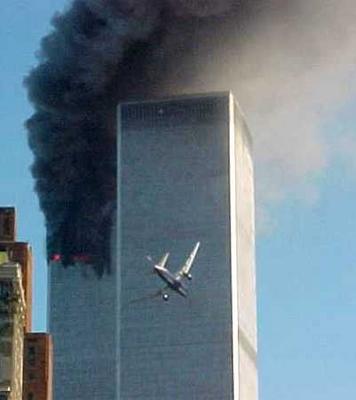
And next time...?
UPDATE: Via Editor & Publisher's blog, a full (and otherwise unreleased here) documentary on that day, and the wish to tidy our memories thereof: The Falling Man.
Lest we forget:

And next time...?
UPDATE: Via Editor & Publisher's blog, a full (and otherwise unreleased here) documentary on that day, and the wish to tidy our memories thereof: The Falling Man.
Tuesday, September 09, 2008
Burying the lede
Ronald Blum's review of Woody Allen's opera directing debut -- in LA Opera's Gianni Schicchi -- is full of praise, leaving this key fact about the "hilarious and memorable" production hidden in the middle:
As for the rest of Trittico, I'm impressed: Los Angeles -- with Mark Delavan as Michele, Sondra Radvanovsky as Angelica, and Thomas Allen as Schicci -- got a much better cast than we did.
An unexpected ending is added when Buoso's cousin Zita (Jill Grove) returns to the stage and stabs Schicchi as he sings his final notesWhat!? Was no one at the company able to warn Allen that changing the ending like this is a cheap, tired trick?
As for the rest of Trittico, I'm impressed: Los Angeles -- with Mark Delavan as Michele, Sondra Radvanovsky as Angelica, and Thomas Allen as Schicci -- got a much better cast than we did.
Thursday, September 04, 2008
Lights out?
Today's New York Sun leads with a story that should depress anyone interested in high culture in the city and elsewhere: the paper itself may go under in a month unless it can find additional financial backers.
Although perhaps not the concentrated blow to opera coverage that was Peter Davis' firing by New York Magazine last summer, the Sun's end would be a dismal result. Its Arts+ section has, on the whole, the best cultural coverage in the city (and probably the country) -- a context that adds value to each individual piece. Its attempt to buck the trend of less high-cultural content rather than more is wholly commendable.
So if any of you happen to know any centimillionaires interested in supporting this sort of thing...
Although perhaps not the concentrated blow to opera coverage that was Peter Davis' firing by New York Magazine last summer, the Sun's end would be a dismal result. Its Arts+ section has, on the whole, the best cultural coverage in the city (and probably the country) -- a context that adds value to each individual piece. Its attempt to buck the trend of less high-cultural content rather than more is wholly commendable.
So if any of you happen to know any centimillionaires interested in supporting this sort of thing...
Wednesday, August 27, 2008
The Met season ahead, part I -- the conductors
Perhaps the greatest performance -- operatic or not -- of the James Levine era here was the Met Orchestra concert of April 29, 2001. Renee Fleming, Olga Borodina, Marcello Giordani, and Rene Pape were soloists that afternoon in an account of Verdi's Requiem still ringing in the ears of those who were there. (All those I've talked to, anyway.) As previously mentioned, Levine, not long upon his own brush with mortality, will lead another performance of that piece next month, with a lesser cast but more specific occasion -- the commemoration of Pavarotti's death.
Tickets to this event will be assigned by a drawing; entries are being accepted now through next week. Despite the early (5PM) start, it should be something.
* * *
Levine also conducts what looks to be the event of the 2008-2009 season: the 125th Anniversary Gala recreating legendary productions of the past. He will also lead part of Opening Night -- less than a month from now -- and some or all performances of just three other things: Damnation of Faust, Gluck's Orfeo, and of course the Ring, which I suppose puts him up to six productions plus galas and three Carnegie Hall concerts. Regrettably, no Mozart operas.
* * *
Other welcome returns are led by Jiři Bělohlávek, whose 2007 Jenůfa was (after some initial roughness) intoxicatingly vital, the most memorable guest-conducting stint I've heard since Christian Thielemann's work on Die Frau ohne Schatten. (Incidentally, the next season's highlight may much depend on whether Fabio Luisi has the pull to get not only Strauss' music but Wernicke's production for Frau revived uncut.) This time Bělohlávek both teams up again with Karita Mattila for Onegin and leads another Czech piece -- Rusalka -- with Renee Fleming. Neither should be missed.
Two others are back in multiple engagements (not counting Opening Night). Marco Armiliato's in Lucia, La Rondine, and Adriana Lecouvreur, and Maurizio Benini in Elisir and Cenerentola. Both Italians are familiar to Met audiences: the former rarely inspiring but always professional, the latter poor to start but showing better in recent years.
* * *
But the season's most notable podium news is its spate of debuts. Scheduled, in order, are Mikko Franck (Salome), Daniele Callegari (Gioconda), Alan Gilbert (Doctor Atomic), Paolo Carignani (Traviata), Daniel Barenboim (Tristan), Lothar Koenigs (Don Giovanni), Riccardo Frizza (Rigoletto and Trovatore), and Pietro Rizzo (Cav/Pag). Apart from old eminence Barenboim (whom I've never much liked in anything but Wagner) and the New York Philharmonic's boss-in-waiting Gilbert, the debutants are relatively young and unknown here. How this new blood does will determine much of the season's success.
Given the uncertainty, it's hard to say how much other, unused conductors will be missed. Among the returnees, I do think Asher Fisch remains as underappreciated as ever, engaged only for the kids' Magic Flute, while the only real disappointment -- Frédéric Chaslin, often dull but blessed with a terrific cast in Boheme -- might have been better-fit for the opera originally scheduled in that spot, Manon (it became Boheme when Netrebko's pregnancy forced her cancellation).
And who's not happy that Placido Domingo's now singing, not conducting in Adriana Lecouvreur? He remains as fine onstage as he is amateurish in the pit.
Tickets to this event will be assigned by a drawing; entries are being accepted now through next week. Despite the early (5PM) start, it should be something.
Levine also conducts what looks to be the event of the 2008-2009 season: the 125th Anniversary Gala recreating legendary productions of the past. He will also lead part of Opening Night -- less than a month from now -- and some or all performances of just three other things: Damnation of Faust, Gluck's Orfeo, and of course the Ring, which I suppose puts him up to six productions plus galas and three Carnegie Hall concerts. Regrettably, no Mozart operas.
Other welcome returns are led by Jiři Bělohlávek, whose 2007 Jenůfa was (after some initial roughness) intoxicatingly vital, the most memorable guest-conducting stint I've heard since Christian Thielemann's work on Die Frau ohne Schatten. (Incidentally, the next season's highlight may much depend on whether Fabio Luisi has the pull to get not only Strauss' music but Wernicke's production for Frau revived uncut.) This time Bělohlávek both teams up again with Karita Mattila for Onegin and leads another Czech piece -- Rusalka -- with Renee Fleming. Neither should be missed.
Two others are back in multiple engagements (not counting Opening Night). Marco Armiliato's in Lucia, La Rondine, and Adriana Lecouvreur, and Maurizio Benini in Elisir and Cenerentola. Both Italians are familiar to Met audiences: the former rarely inspiring but always professional, the latter poor to start but showing better in recent years.
But the season's most notable podium news is its spate of debuts. Scheduled, in order, are Mikko Franck (Salome), Daniele Callegari (Gioconda), Alan Gilbert (Doctor Atomic), Paolo Carignani (Traviata), Daniel Barenboim (Tristan), Lothar Koenigs (Don Giovanni), Riccardo Frizza (Rigoletto and Trovatore), and Pietro Rizzo (Cav/Pag). Apart from old eminence Barenboim (whom I've never much liked in anything but Wagner) and the New York Philharmonic's boss-in-waiting Gilbert, the debutants are relatively young and unknown here. How this new blood does will determine much of the season's success.
Given the uncertainty, it's hard to say how much other, unused conductors will be missed. Among the returnees, I do think Asher Fisch remains as underappreciated as ever, engaged only for the kids' Magic Flute, while the only real disappointment -- Frédéric Chaslin, often dull but blessed with a terrific cast in Boheme -- might have been better-fit for the opera originally scheduled in that spot, Manon (it became Boheme when Netrebko's pregnancy forced her cancellation).
And who's not happy that Placido Domingo's now singing, not conducting in Adriana Lecouvreur? He remains as fine onstage as he is amateurish in the pit.
Thursday, August 21, 2008
Thumb in the eye
In its own little way, perhaps this bit of propagandizing is as much demonstrative muscle-flexing as the rape of Georgia itself. For as Europe's dependence on Russian petroleum has convinced Putin of his local invincibility, so perhaps arts organizations' reliance on Russian talent, attendance, and support will keep them from responding to this grossly -- and offensively -- political gesture.
Gergiev no longer has any official position at the Met (his tenure as Principal Guest Conductor ended with a concert this spring) and as far as I can see has not been engaged for any of this upcoming season's performances. But it will be interesting to see what, if anything, other companies do.
(It will also be interesting to see if the Russophile trolls that have flooded blogs since this war started will leave their droppings in the comments here.)
UPDATE (8/26): As for what actually happened...
Gergiev no longer has any official position at the Met (his tenure as Principal Guest Conductor ended with a concert this spring) and as far as I can see has not been engaged for any of this upcoming season's performances. But it will be interesting to see what, if anything, other companies do.
(It will also be interesting to see if the Russophile trolls that have flooded blogs since this war started will leave their droppings in the comments here.)
UPDATE (8/26): As for what actually happened...
Monday, August 18, 2008
Hidden price increase
Last week's news of the rebounding dollar and its cause -- imminent recession in Europe, while the US continues in a mere slowdown -- has, of course, the side effect of making transatlantic opera tourism more expensive.
Whether the Met will be noticeably hurt by this reversal of one of the Gelb tenure's favorable winds remains to be seen.
Whether the Met will be noticeably hurt by this reversal of one of the Gelb tenure's favorable winds remains to be seen.
Friday, August 01, 2008
RSS-flavored sidebar
Blogger doesn't make things easy (all sorts of undeclared and undocumented styling of certain elements), but it does make them do-able. Each blog in the sidebar now shows -- and is sorted by -- the time of its most recent post. This does take away a bit of the site's repose, but convenience carries the day for now.
(Though I was able to massage the extra whitespace out of the BlogList widget, some still remains in the Archive list. If anyone knows what Blogger is covertly styling therein, please email or leave a comment.)
(Though I was able to massage the extra whitespace out of the BlogList widget, some still remains in the Archive list. If anyone knows what Blogger is covertly styling therein, please email or leave a comment.)
Subscribe to:
Posts (Atom)